Many people have asked how the Club reached its current situation. The challenges facing the future of the Club ultimately stem from two factors: a broader decline in interest in cultural social organizations and a pattern of poor leadership and governance.
Changing Times and Declining Membership
The world has changed dramatically over the past few decades. Thanks to the internet, social media, and other forms of digital communication, people can now connect with others who share their interests without ever leaving home. While this has brought many benefits, it has also made it more difficult for traditional social and cultural clubs to attract and retain members.
The Commonwealth Club experienced the same challenges faced by many similar organizations. Membership, which reached nearly 900 members in the early 2000s, gradually declined over the years. Today, it is believed that membership is somewhere between 100 and 200 people however, this has been difficult to ascertain as the current board refuses to release the roster or any actual numbers.
Many longtime members recognized this trend years ago. It was widely understood that the Club would eventually need to adapt, downsize, or possibly wind down operations in a thoughtful and organized way. Unfortunately, some members feel that management decisions made in recent years accelerated the Club’s decline and made that transition much more difficult than it needed to be.
Leadership and Governance Concerns
Over the past several years (as of 2026), under the current president’s leadership, the Club has experienced significant internal challenges. Communication with the membership has been inconsistent, important information has often been withheld, and statements made by the president have frequently conflicted with documented facts. These concerns are not based on rumor or speculation; extensive records exist that detail many of these issues.
Some members have faced baseless accusations of misconduct and theft without evidence. Some have even been prevented from renewing their memberships without clear explanation. Financial statements have not been provided to members for years. The bylaws have also been changed without following the proper amendment procedures.
Annual meetings have often left members with incomplete or misleading information. In one instance, voting for a board position was reportedly conducted three separate times before leadership obtained the outcome it preferred.
Financial Transparency
Financial oversight has been a longstanding concern. While it is blatantly clear that the Club’s finances have deteriorated, members have had little opportunity to independently evaluate the situation because financial records have not been made available.
As a result, members have been asked to rely largely on leadership’s characterization of events and finances rather than actual data. Events have been described as successes or failures without supporting figures, and members have rarely been provided with meaningful information regarding attendance, profitability, or operating costs. In some cases, events favored by the membership reportedly faced administrative obstacles if they did not align with the president’s priorities.
Communication Breakdown
The monthly newsletter was eventually discontinued, though it had rarely been published in a timely manner for several years before. Members seeking information about upcoming events often found it difficult to obtain answers from the board and president – sometimes to the point of hostility. Events – including the annual meetings – have often been scheduled or rescheduled with minimal notice. The website and Facebook pages are infrequently updated with important information.
Many members feel that decision making has shifted away from the membership and instead has become concentrated in the hands of the president. At this point, accountability to the members is virtually non-existent.
The Sale of the Clubhouse
The most visible consequence of these issues has been the loss of the clubhouse itself.
It is important to note that many members understood that the building presented real challenges. The clubhouse required ongoing maintenance, repairs, and upgrades, and there was broad recognition that keeping the property indefinitely might not be financially practical.
For that reason, most members were not necessarily opposed to selling the building and relocating the Club. The concerns center more on the process and the decisions that followed.
In Spring 2025, members were mailed informational packets and ballots regarding the proposed sale – packets containing dozens of pages of printouts, which many believe was paid for out of the Club’s coffers (the president denies this, however there have been multiple large expenses which have never been explained, it is our conjecture that this is one of those expenses).
According to multiple accounts, completed ballots were stored unsecured and unsealed, counted during a closed session by the president and board, and were not made available for independent verification after the results were announced.
Questions also abound regarding a reported increase in membership immediately before the vote. Some have speculated that these new memberships were recruited specifically to support the sale, although definitive evidence regarding the circumstances remains unclear.
Nonetheless, the decision was made to sell the clubhouse.
What Followed
Following the sale, leadership chose not to relocate to an existing building, as had been discussed with the membership, but instead purchased a vacant lot in Sterling Heights with plans to construct a new clubhouse. This decision was made by the president and board with no member input.
The original clubhouse was sold for $428,000, including a generous $75,000 land contract for the new buyer. Members were informed that a vacant lot had been purchased (for $192,000, but the members were not told this) and that construction would begin in September 2025, with completion anticipated in time for the Club’s Christmas celebration.
Although the Club sold its existing building and began paying rent to the new owners, the newly acquired property remains undeveloped. Reports indicate that the City of Sterling Heights has inquired about the absence of building permit applications.
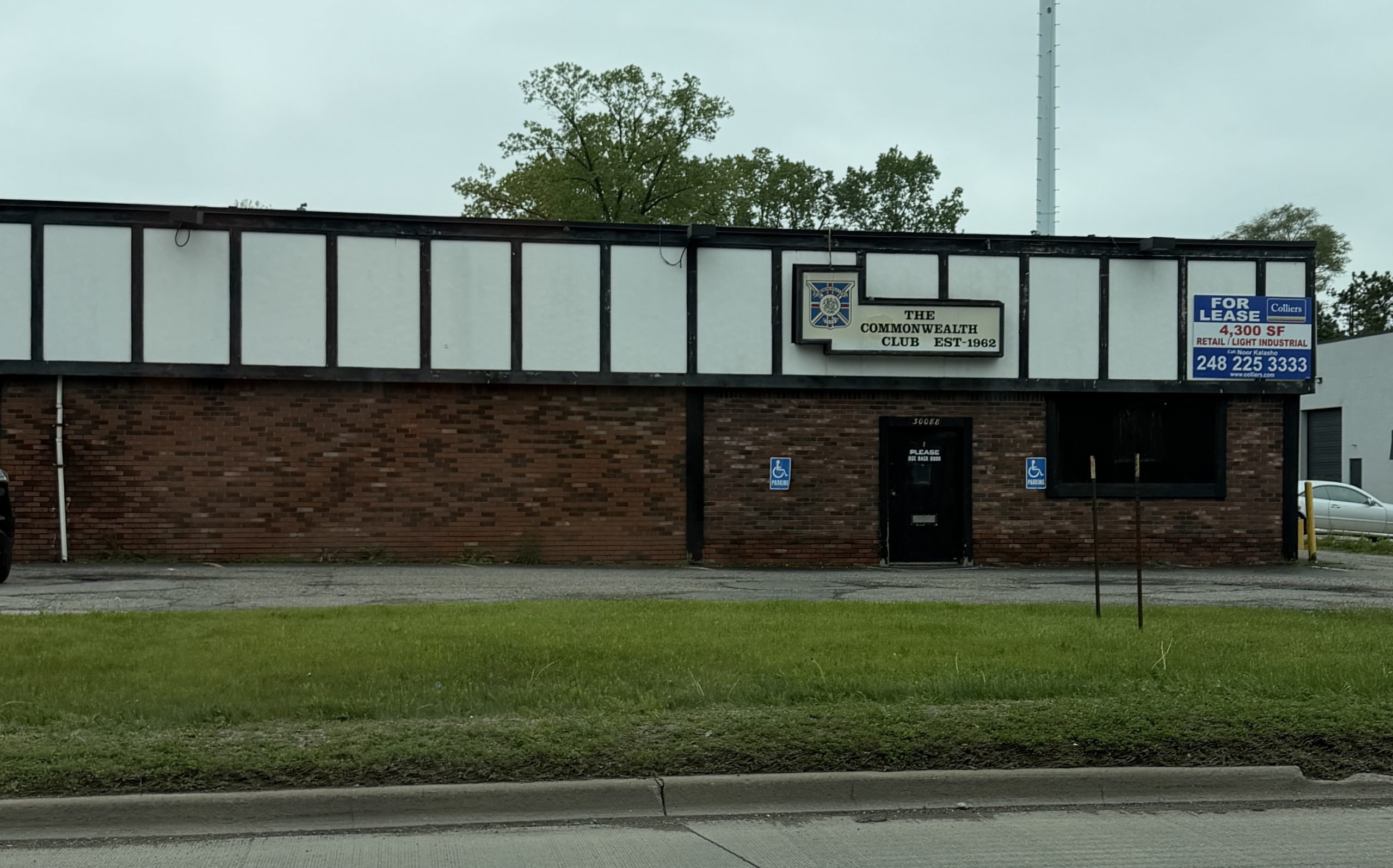
The original clubhouse was vacated at the end of 2025, and the Club’s furnishings and equipment were placed into storage at ongoing expense. Members were told the building was no longer structurally suitable for occupancy. However, shortly after the Club vacated, the new owners listed the property for lease through a commercial agency, leading some members to question whether the condition of the building had been accurately represented.
Since then, meetings and events have been held at various temporary locations, with significant declining attendance.
Looking Ahead
The issues described above represent only a portion of the concerns that have been documented over the years. Additional allegations include repeated bylaw violations, actions that may jeopardize the Club’s tax-exempt status, failure to file required federal tax documents for multiple years, disregard for guidance from the Board of Trustees, gross negligence of clubhouse building maintenance, health code violations, and alleged embezzlement of some of the funds from the sale of the clubhouse. It is further alleged that there are no longer sufficient funds left from the sale of the clubhouse in order to build a new one.
At this point, the Club’s future is uncertain. The purchased property remains vacant, attendance at events has declined significantly, and meaningful information about the organization’s plans and finances remains difficult – if not impossible – to obtain.
Some members believe that the president has no intentions of building a new clubhouse. Others fear that we may ultimately be dissolved without the level of member involvement required by the bylaws. While the specifics remain unclear, what is increasingly clear is that the Commonwealth Club that served its members for more than six decades no longer exists as the Club we love and remember.
We may never fully understand why these decisions were made or what the long-term objectives were. What we do know is that the Club deserved a thoughtful and dignified conclusion – one that honored its history, respected its members, and preserved its legacy. Instead, many feel they have witnessed a preventable decline marked by secrecy, conflict, and missed opportunities.